For generations, the puesta de largo was the ceremony through which a young woman in Spain was formally presented to society. The name translates loosely as “coming out in a long dress” — the floor-length gown itself marked the symbolic passage from childhood to adulthood, and the ball that followed confirmed that transition before extended family and the parents’ social circle. Comparable in spirit to a debutante ball, the puesta de largo has its own distinctly Spanish rhythm and vocabulary. For much of the late twentieth century it felt like a fading custom, associated with grandmothers rather than daughters. In the past several years, however, it has returned to Madrid with a force that surprises even those who remember it from an earlier generation: families choosing to mark a daughter’s fifteenth or eighteenth birthday with a ceremony of its own, distinct from an ordinary birthday party.
What the celebration involves today
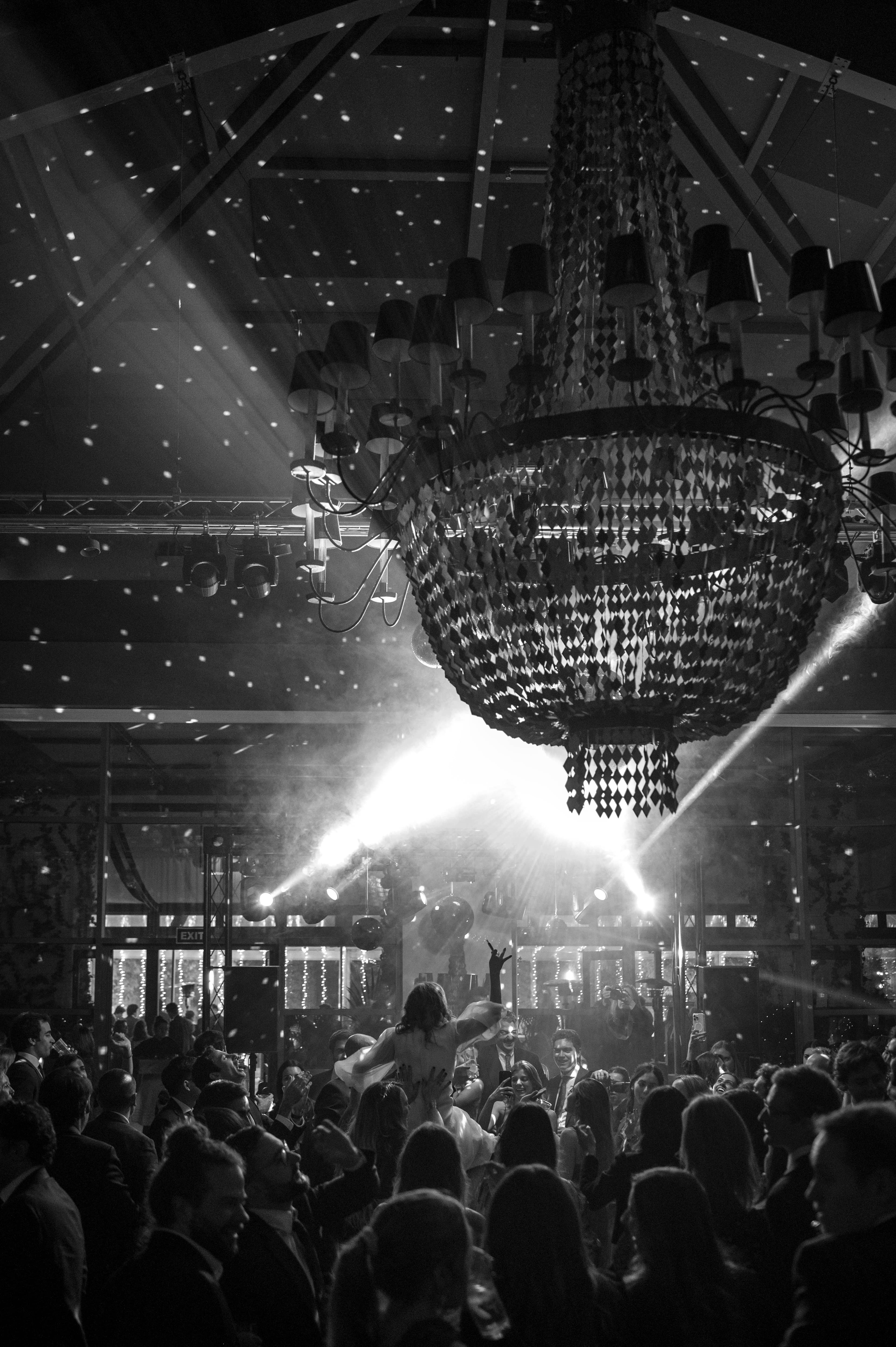
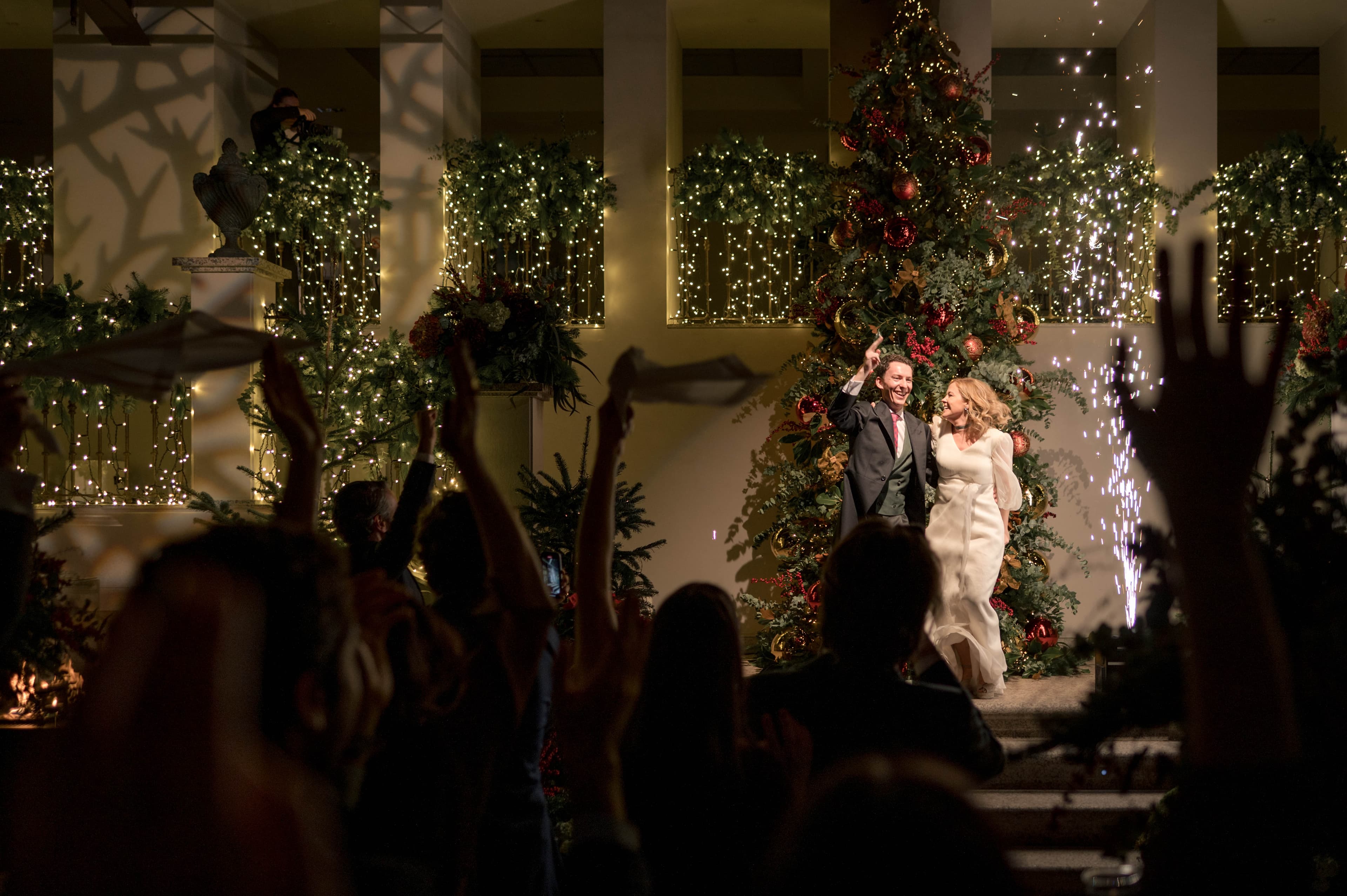
The contemporary puesta de largo keeps its classic structure while shedding some of its formality. The dress remains the symbolic center of the evening — often chosen months in advance, fitted more than once, and kept afterward as a family piece — but the presentation itself no longer follows a single script. Some families opt for a formal entrance before assembled guests; others prefer a quieter moment just before the dancing begins. The opening waltz, usually danced with the father or with both parents, remains the moment everyone waits to photograph, followed by the gradual arrival of friends and family onto the dance floor.
The rest of the evening organizes itself around that center: preparations at home during the afternoon, arrival at the venue, a cocktail hour or dinner, and later, the dancing itself. Family portraits — grandparents with the honoree, siblings, the full multi-generational group — tend to be concentrated in a short window before dancing begins, when everyone is dressed and the evening light still allows work without flash.
Planning the evening's photography
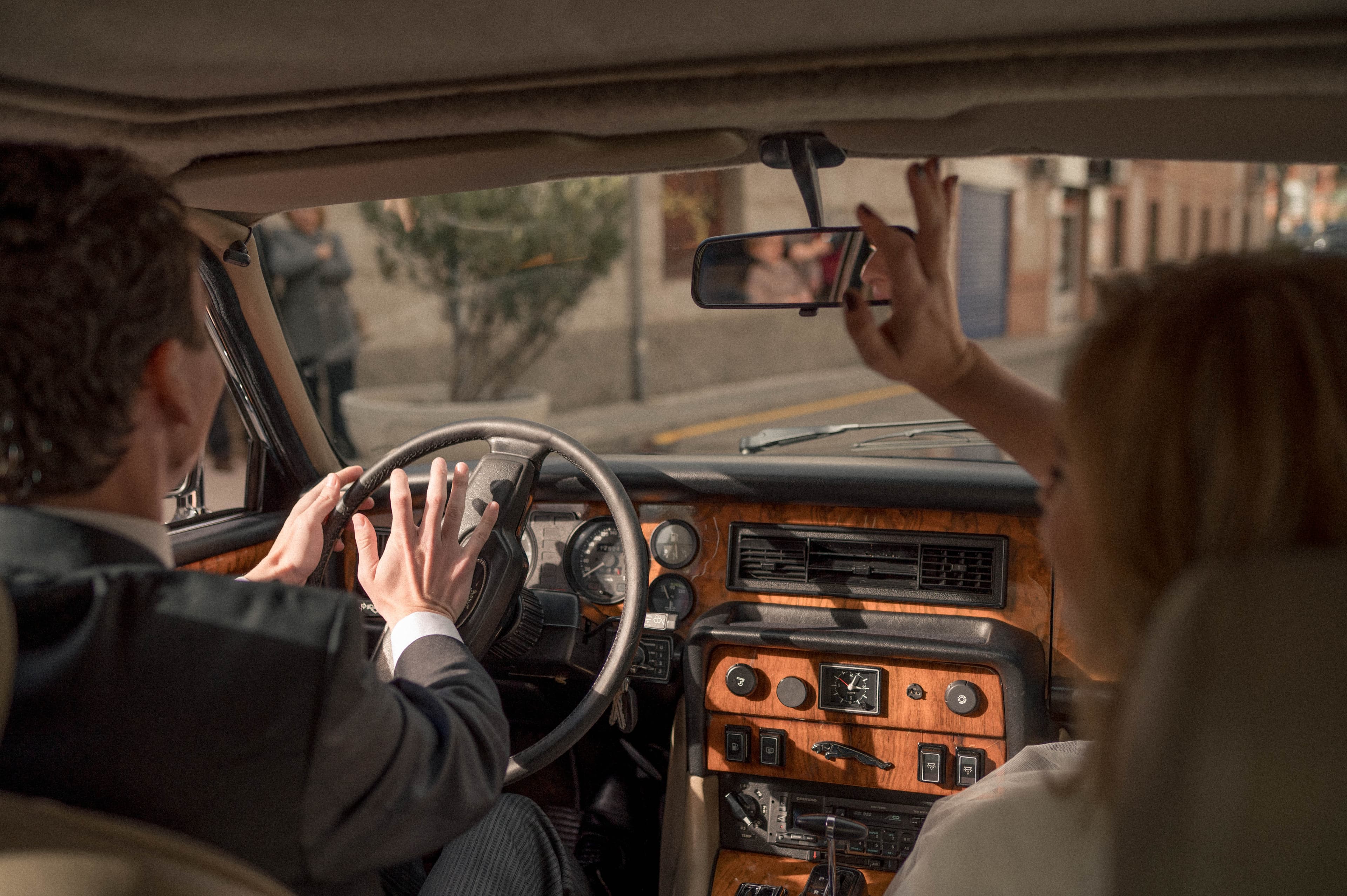
A well-photographed puesta de largo requires thinking of the night as a sequence of distinct light, not a single event. The afternoon at home offers natural light, often soft and directional, well suited to the preparations and to the first moment the young woman puts on the dress that evening. Arrival at the venue coincides almost always with golden hour, that brief interval when outdoor light turns warm and low. The dancing itself unfolds under artificial light, usually mixed across several color temperatures — candles, room lighting, the occasional projector.
This sequence of conditions is precisely where film photography offers an advantage few people notice until they see it in an album. Color negative film absorbs these mixed light sources with a gradation that digital images, by default, tend to correct or flatten out. A candle beside a chiffon dress, or the glow of a lamp behind a couple dancing, is preserved on film with a warmth and texture that recall the memory as it was lived, rather than a technically corrected reconstruction of it.
For the same reason, a documentary approach — observing rather than directing, anticipating a moment rather than staging it — suits this kind of celebration particularly well. A puesta de largo carries its own emotional rhythm: the nervousness before the presentation, the relief and joy afterward, the conversations that stretch on at the tables. A photographer who moves discreetly among guests captures these nuances without interrupting an evening the family has prepared with such care.
What to consider when commissioning a photographer
Families beginning to plan this celebration should think of photographic coverage in blocks: preparations at home, arrival and presentation, family portraits before the dancing, and the dancing itself. Not every family needs all four phases documented with equal intensity, but it is worth deciding this in advance, since each block carries its own light and its own working rhythm.
Multi-generational portraits — grandparents, parents, siblings, the honoree herself — rarely take more than twenty or thirty minutes, but they tend, over time, to be the images most treasured. It is worth setting that window aside explicitly in the evening's schedule, rather than trusting it will happen spontaneously between the cocktail hour and the dancing.
Finally, it is worth considering where these photographs will ultimately live, beyond immediate sharing. A printed album, or a selection of developed prints, becomes over the years a family object inherited alongside the dress itself. A puesta de largo is, at its core, a celebration meant to be looked back on decades later; the photography that documents it deserves the same horizon.
Planning your own wedding? Let's talk.
Get in Touch